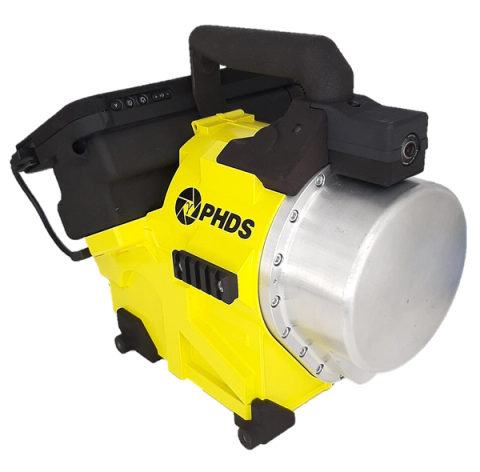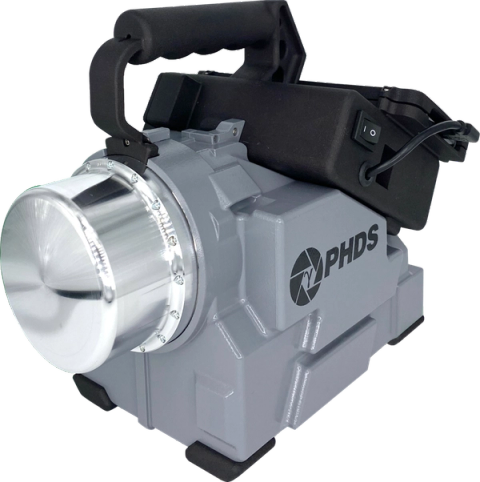
Decommissioning a nuclear facility means knowing exactly where contamination sits, which isotopes are present, and how much, often across large structures, in elevated-dose areas, and against tight release criteria. PHDS HPGe systems locate contamination spatially, identify activation and fission products by their gamma signatures, and quantify activity for disposal and clearance decisions, with the energy resolution to separate facility contamination from natural background and to tell closely spaced isotopes apart.
Locate contamination before you touch it
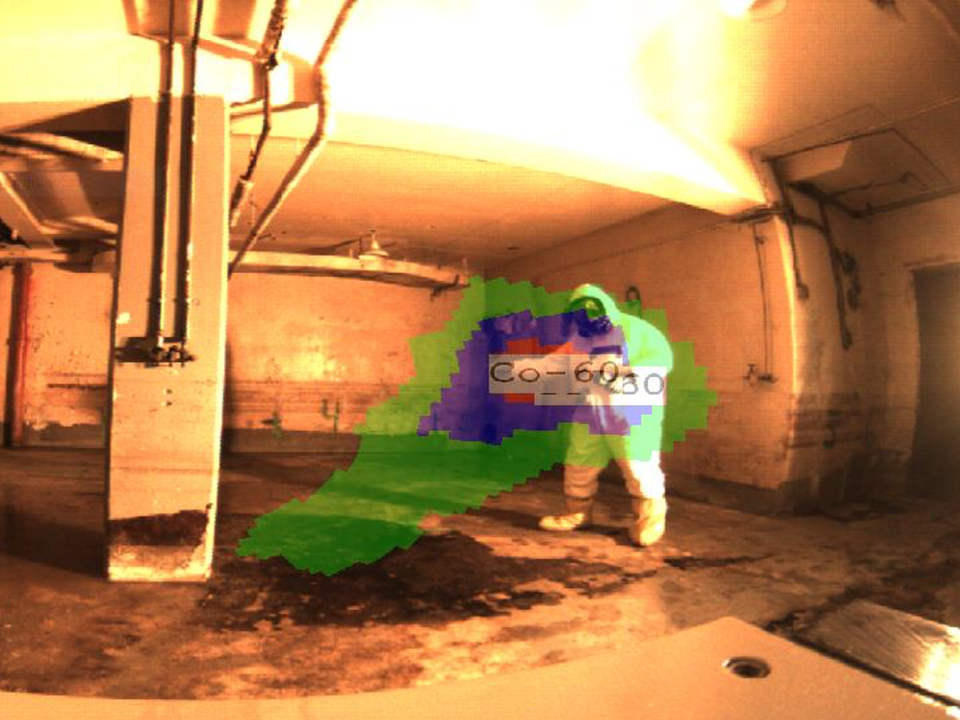
The GeGI gamma-ray imager maps contamination from a single standoff position and overlays source location on an optical image of the scene. Operators can find hotspots on walls, piping, equipment, and structures without close contact, supporting ALARA dose reduction and focusing decontamination effort where the activity actually is, instead of treating an entire surface uniformly. Compton and pinhole imaging cover wide-area survey and fine localization from the same instrument.
Identify the isotopes, choose the disposal path
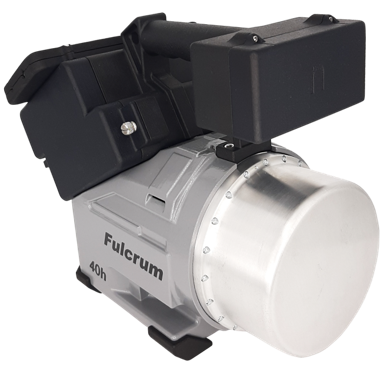
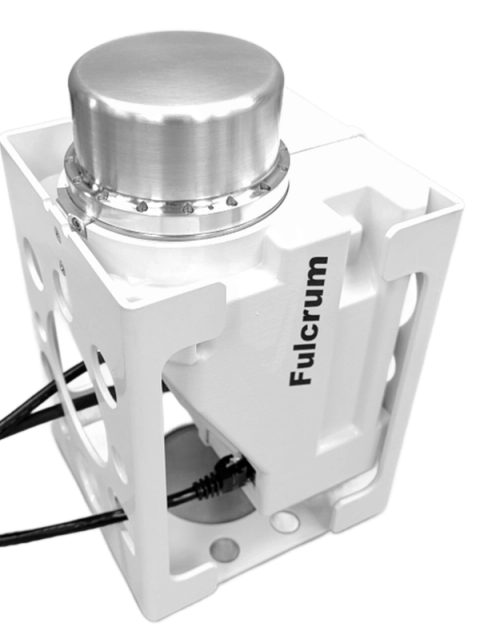
The Fulcrum and Fulcrum-40h portable HPGe spectrometers identify the isotopes present and quantify their activity in the field, hand-carried across a site or into a hot cell. High energy resolution separates activation and fission products such as Co-60, Cs-137, and the Eu-152 and Eu-154 activation lines, and distinguishes facility contamination from natural background, so material follows the correct disposal route rather than being conservatively over-classified. The Fulcrum-40h's higher efficiency extends sensitivity to low-level and distributed contamination.
Quantify for segregation and free release
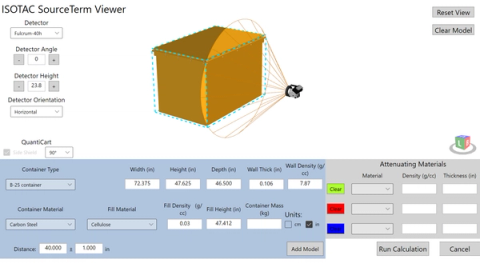
ISOTAC geometry-corrected NDA converts field spectra into calibrated activities for waste containers and debris, supporting segregation into the correct disposal category and the documented activity records a cleanup project has to produce. For free-release and clearance work, the Fulcrum-L provides low-background counting and a minimum detectable activity for every nuclide of interest, so you can demonstrate that material falls below release criteria rather than defaulting it to waste.